

Story#594
Kangaroos at the tee
The golf course had a local rule about kangaroos on the fairway. There were fourteen of them and none of them moved for anyone.
Wider than the Moon, emptier than almost anywhere, and stranger than its reputation.
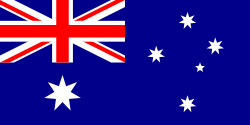
The practical numbers, before the stories.
Worth knowing: Seasons are reversed. December is high summer and school holidays.
The decisions that determine whether the trip works, whichever country you are going to.
Australia is wider east to west than the Moon is across, holds roughly 10,000 beaches, and keeps the largest structure ever built by living organisms just off its northeast coast. Most visitors see the sliver between Sydney and Cairns and come home convinced they have seen the country.
What follows is a mix of the famous and the odd: why Uluru is mostly underground, why the outback has more feral camels than Arabia, why wombat droppings are cubes, and how a single fence long enough to reach from Berlin to Kabul shaped a whole agricultural economy. Distances are the recurring theme. Plan fewer stops than you think you need.
The golf course had a local rule about kangaroos on the fairway. There were fourteen of them and none of them moved for anyone.
Ninety miles straight, no curve at all. We passed four road trains and one cyclist who waved with an energy that suggested he had not seen anyone for a while.
The signs say dangerous. Then one walks out of the rainforest two metres in front of the car and you understand the signs completely.
The coastal walk at six in the morning was full of runners, swimmers and one man doing tai chi on a rock. Nobody had a phone out.
Everybody goes at sunset. We went at eleven in the morning in 38 degrees, saw four people, and the rock was a colour nobody photographs.
We drove the whole road in one day, which is a mistake. Someone at a bakery in Apollo Bay told us to take three, and she was right.
We stood at Cape Grim in wind that had crossed the Southern Ocean untouched. It smelled like nothing at all, which is apparently the point.
The skipper said the reef changes every year now. He had been diving the same site for twenty-three years and pointed out exactly where the colour had gone.
Australia measures about 4,000 kilometres east to west, wider than the Moon's 3,475-kilometre diameter.
Visiting a different Australian beach every day would take about 27 years to see them all.
Stretching over 2,300 kilometres, the reef is the largest structure built by living organisms.
The visible rock is the tip of a formation that continues several kilometres below the desert surface.
Lake Hillier stays bubblegum pink even in a bottle, thanks to salt-loving microorganisms.
Air measured at Cape Grim after crossing the Southern Ocean is among the cleanest on Earth.
The Dingo Fence stretches further than the distance from Berlin to Kabul, built to protect sheep country.
Once service alleys, Melbourne's laneways now hold legal street art walls, tiny bars and coffee counters.
Just over one million self-cleaning Swedish tiles cover the shells, in two subtly different finishes.
Feral dromedaries introduced in the 1800s now number in the hundreds of thousands across the outback.
Their tail and leg structure prevents reverse movement, which is partly why the kangaroo appears on the coat of arms.
Wombats produce cube-shaped droppings thanks to uneven intestinal walls, so the pellets do not roll off rocks.
Nothing matched that search on this page. Try a shorter word, or browse by destination.
Australia is one of 36 countries in the library. Read straight through a continent, or start from the map of everywhere we have written about.