
What the desert actually asks of you
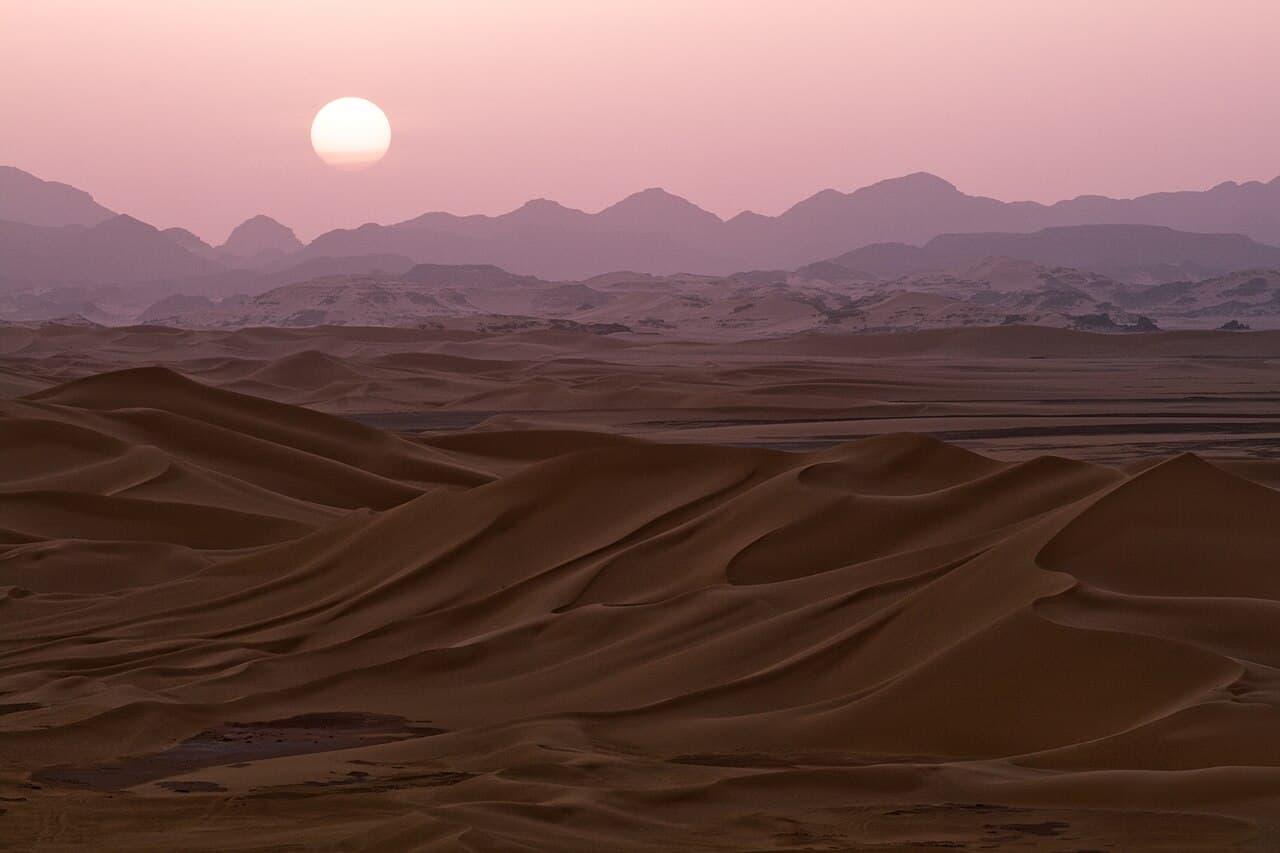
The first thing the desert does is contradict the brochure. It is not uniformly hot: the Sahara at three in the morning is cold enough to wear everything you brought, the Gobi drops below minus thirty, and Antarctica is the largest desert on Earth. The second thing it does is remove the margin for error you are used to.
On this page
Understand which desert you are going to
“Desert” describes rainfall, not temperature, and the practical differences are enormous. Read about the specific place, not about deserts in general.
- Hot sand deserts - the Sahara, parts of Arabia and the Namib: extreme daytime heat, sharp night-time cooling and genuine navigation difficulty.
- High cold deserts - the Gobi, Atacama and Pamirs: altitude compounds everything.
- Rocky and semi-arid regions - Wadi Rum, much of the American Southwest and the Kalahari.
- Polar deserts - such as the McMurdo Dry Valleys, stripped bare by katabatic winds.
Water: the arithmetic
Water requirements depend on heat, exertion, duration and health. Ask local rangers or qualified guides about conditions, water reserves and safe activity limits; a generic quantity is not a guarantee of safety.
Carry water in separate containers and plan a reserve. Discuss hydration needs with a health professional when relevant; excessive water intake can also be dangerous.
Heat, and the hours you simply do not use
The middle of the day is for shade. Move from first light to about ten, and again from late afternoon. Between those windows, do nothing energetic.
Cover up rather than strip off. Loose, long, light-coloured clothing reduces heat load and water loss better than bare skin. Add a wide brim or head wrap and sunglasses that genuinely block UV.
Stop exertion and move out of the heat if unwell. Confusion, collapse or altered behavior in heat requires urgent medical help and cooling; heat stroke can occur while someone is still sweating. Do not wait for sweating to stop.
Cold, which is the part people fail to plan for
Clear desert skies radiate heat away extraordinarily fast after sunset. A 40°C day can become a 5°C night, and at altitude it falls below freezing. Carry a warm mid-layer, hat and a sleeping bag rated colder than the forecast suggests.
Navigation and the things that go wrong
Sand deserts lack landmarks, dunes change shape and tracks disappear. A phone is not a navigation system when it is at 8% battery and 48°C.
- Carry offline maps and a paper map, and know roughly where north is without a device.
- Tell somebody your route and expected return time, and stick to it.
- If driving, travel in two vehicles or with a guide. Recovery gear, a compressor and knowledge of lowering tyre pressure are essential.
- If a vehicle breaks down, stay with it. It is visible, provides shade and holds your water.
- In a sandstorm, stop, shelter, cover your face and wait. They pass.
Hire a local guide, and not only for safety
A guide is the difference between a landscape and a place. They know where the water is, which track is passable, when the wind rises and where to sleep out of it. They also know the rock paintings, booming dunes and caravan routes you would never find alone.
Guiding is also one of the few good economic options in many desert communities, which is exactly where the money should go.
What to carry, specifically
- Water in more than one container, plus electrolyte tablets.
- Long, loose, light clothing; head covering; UV sunglasses; high-factor sunscreen and lip balm.
- A warm layer and hat for the night.
- A head torch with spare batteries.
- Offline maps, paper map, compass and power bank.
- A small first-aid kit including rehydration salts and blister treatment.
- Something to keep sand out of your camera. It gets everywhere and does not leave.
Why go at all
Because desert silence is not like other silence. After the generator stops there may be no wind, insects or sound at all. Because the Milky Way can be bright enough to cast a shadow. Because ancient trees can stand for centuries in air too dry for them to rot.
The desert asks for preparation and gives back scale. It is a fair trade.
Sources and useful links
Consult these organizations’ current information and conditions. These links do not validate every statement in this guide; schedules, prices and guidance can change.
Animate your itinerary
Once the logistics are sorted, turn the trip into a share-ready animated map.
Open the editor